
HRT Clinic SEO Tips That Help Patients Find You

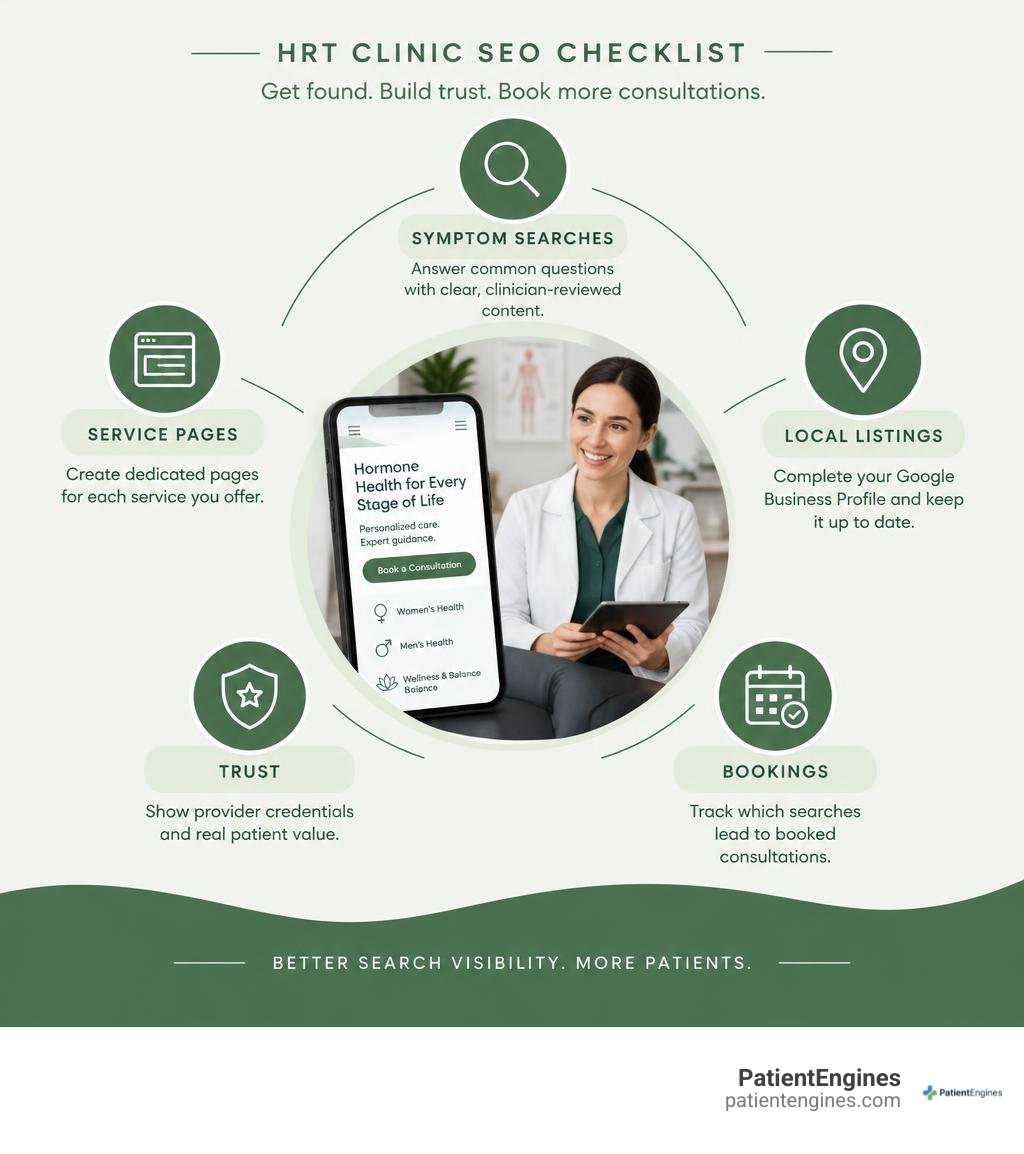
The most useful HRT clinic SEO tips start with what patients need to find and trust. Build a clear page for each service you offer, make your site easy to use on a phone, and complete your Google Business Profile. Then publish clinician-reviewed answers to common patient questions, show provider credentials, and track which searches lead to booked consultations.
Hormone therapy patients may search for symptoms long before they search for a clinic. Your site needs to help them at each stage without making promises about treatment results. That matters even more for a cash-pay practice, where patients need clear information before they book.
I’m Matt Coffy, CEO of PatientEngines, and I’ve spent more than 15 years helping healthcare practices turn marketing into booked appointments. These HRT clinic SEO tips bring that patient-acquisition experience to the steps below.
The global hormone replacement therapy market was valued at $19.7 billion in 2024 and is projected to reach $33.69 billion by 2035, growing at a compound annual growth rate of 5.9%. North America holds a massive 38% revenue share in this market. With roughly 1.3 million women entering menopause every year in the United States alone, and over 1.2 billion women globally projected to be over age 50 by 2030, the demand for both female hormone therapy and male testosterone optimization is reaching historic highs.
Capturing this surging demand requires more than basic web design. Because over 65% of all healthcare searches happen on mobile devices, modern hormone practices must combine precision technical search marketing with deep clinical credibility to stand out in local search engine results pages (SERPs).
Why Medical SEO Differs for Hormone Replacement Therapy Clinics
Marketing a hormone optimization clinic is entirely different from running search campaigns for a standard family doctor or general medical clinic. In search engine algorithms, hormone replacement therapy falls squarely under Google’s strictest classification: Your Money or Your Life (YMYL).
Google applies its highest quality standards to YMYL websites because misleading or inaccurate health advice can directly harm a searcher’s physical well-being, financial security, or mental health. When search algorithms evaluate a site offering testosterone therapy, bioidentical hormones, or thyroid management, they demand unambiguous proof of clinical authority, verified practitioner expertise, and scientific consensus.
Furthermore, most hormone optimization practices operate as cash-pay, out-of-network, or concierge models. Patients are not simply looking for a doctor who takes their insurance copay; they are making a significant out-of-pocket investment in their vitality and longevity. This financial dynamic creates natural skepticism. Prospective patients conduct extensive research, comparing protocols, safety records, provider credentials, and pricing transparency before ever picking up the phone.
Navigating this competitive environment demands specialized HRT TRT marketing tailored specifically to the unique nuances of endocrine medicine, telemedicine delivery models, and high-intent cash-pay prospective patients.
Navigating Strict Regulatory and Advertising Compliance
Search engine optimization is inherently safer and more sustainable than paid advertising channels, which frequently restrict or ban keywords related to hormones, controlled substances, and prescription therapies. However, organic content must still strictly adhere to healthcare advertising regulations enforced by the Food and Drug Administration (FDA), Federal Trade Commission (FTC), and state medical boards.
To ensure your organic strategy remains legally sound and protected from penalties:
- Avoid Absolute or Curative Claims: Never promise that hormone replacement “cures” chronic fatigue, reverses aging, or guarantees specific fat loss. Instead, use symptom-focused language, explaining how hormone optimization “may help alleviate” or “is designed to address” symptoms of deficiency.
- Maintain Compounding Transparency: If your practice prescribes compounded bioidentical hormones (such as custom-dosed creams, troches, or subcutaneous pellets), clearly articulate their nature and ensure all claims align with FDA and state compounding board guidelines.
- Implement Robust Medical Disclaimers: Place prominent, readable disclaimers across all service pages, blog posts, and patient guides clarifying that individual results vary based on baseline blood chemistry, lifestyle, and medical history.
- Abide by Telemedicine Laws: Telehealth platforms have revolutionized hormone therapy, cutting practice operational overhead by up to 90% and accelerating first-time patient onboarding. However, your website must clearly state the geographic jurisdictions where your clinical team is actively licensed to practice and prescribe.
The Three-Stage HRT Patient Search Journey
Hormone patients rarely search for “buy testosterone online” or “bioidentical clinic near me” on day one. They navigate an extended search funnel that spans several weeks or months. Winning local organic search requires publishing tailored content mapped to each distinct phase of this journey.
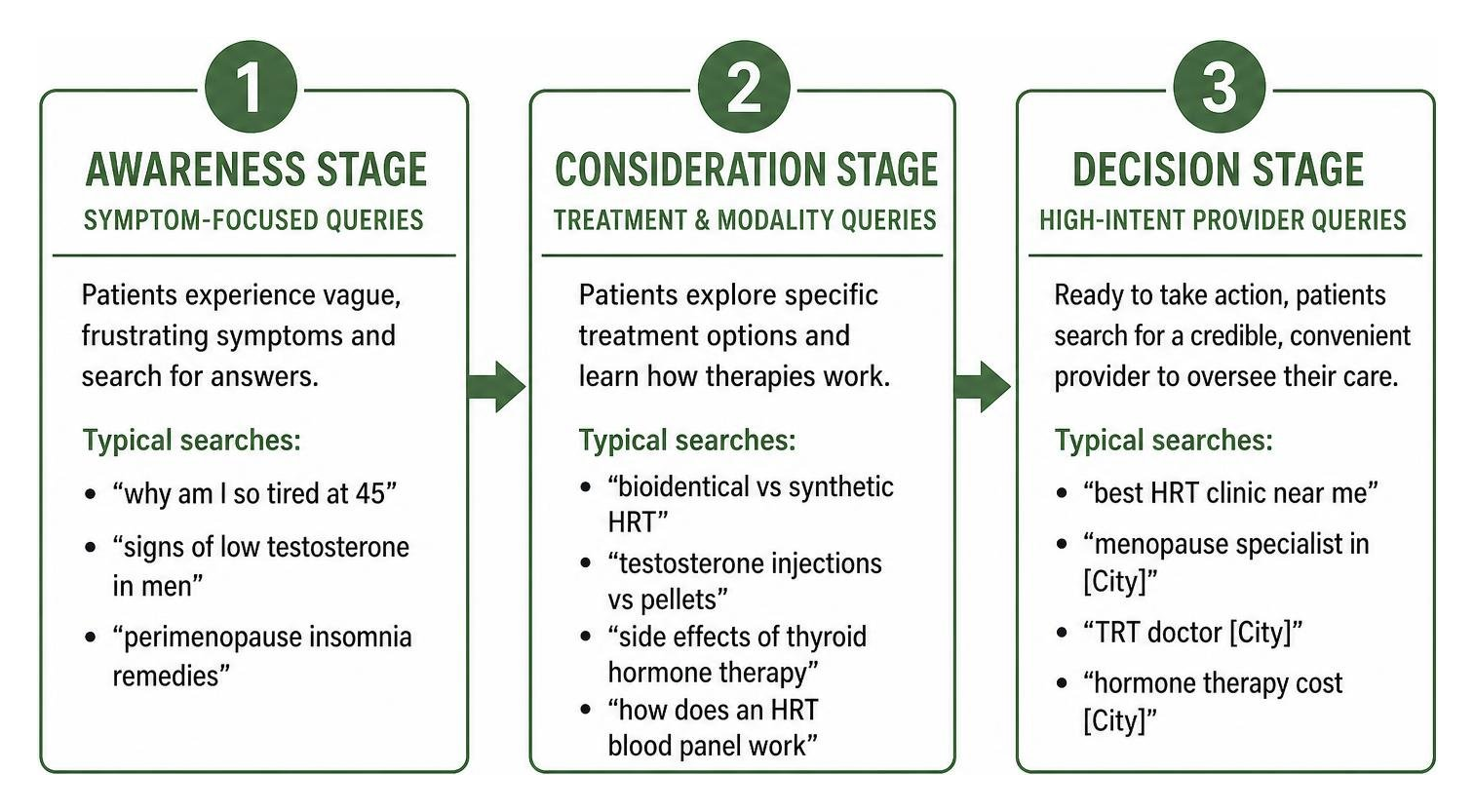
- Awareness Stage (Symptom-Focused Queries): Patients experience vague, frustrating symptoms such as brain fog, afternoon energy crashes, sudden stubborn weight gain, night sweats, low libido, or unexplained mood swings. They search queries like: “why am I so tired at 45”, “signs of low testosterone in men”, or “perimenopause insomnia remedies”.
- Consideration Stage (Treatment & Modality Queries): Having identified a probable hormonal imbalance, patients explore specific therapeutic avenues. They search queries like: “bioidentical vs synthetic HRT”, “testosterone injections vs pellets”, “side effects of thyroid hormone therapy”, or “how does an HRT blood panel work”.
- Decision Stage (High-Intent Provider Queries): Ready to take action, the patient searches for a credible, convenient practice to oversee their care. They type high-intent local phrases into Google: “best HRT clinic near me”, “menopause specialist in [City]”, “TRT doctor [City]”, or “hormone therapy cost [City]”.
Core Technical and On-Page HRT Clinic SEO Tips for 2026
To rank ahead of competing wellness centers and national direct-to-consumer telehealth brands, your clinic’s digital infrastructure must be fast, responsive, and technically immaculate.

Investing in structured SEO programs ensures that your site architecture, page performance, and schema markup consistently meet Google’s technical requirements while maximizing local visibility.
| Strategy Component | Local Foundation Focus | Full Growth Engine Focus |
|---|---|---|
| Primary Goal | Local Map Pack 3-pack rankings & local citations | Comprehensive multi-location organic dominance |
| Target Keywords | “HRT clinic near me”, “TRT doctor [City]” | Symptom queries, treatment guides, condition pages |
| Content Scope | Core service pages + Google Business Profile posts | Weekly clinical blogs, video transcripts, downloadable guides |
| Schema Depth | LocalBusiness, MedicalClinic, Physician | Comprehensive MedicalWebPage, FAQPage, MedicalCondition |
| Backlink Strategy | Local sponsorships, chambers of commerce, healthcare directories | Medical journal citations, digital PR, healthcare publications |
Technical Foundations: Site Speed, Mobile UX, and Structured Data
A slow, cluttered website will quietly destroy your conversion rates and search rankings. Google expects pages to load in under three seconds, especially on mobile devices.
Follow these non-negotiable technical standards:
- Image Compression: Compress all website imagery, staff headshots, and infographic assets to under 100 KB before uploading. Utilize modern next-gen formats like WebP or AVIF.
- Core Web Vitals: Minimize render-blocking JavaScript and clean up heavy CSS to maintain optimal Largest Contentful Paint (LCP) and low Cumulative Layout Shift (CLS).
- HTTPS and HIPAA-Compliant Security: Secure every page with 256-bit SSL encryption. Ensure all digital contact forms and consultation scheduling widgets route through HIPAA-compliant, encrypted portals.
- Structured Medical Schema Markup: Add JSON-LD schema markup to tell search engine crawlers exactly what your clinic does. Essential schema types include
MedicalClinic,Physician,MedicalCondition,MedicalTherapy, andFAQPage.
Structuring High-Converting Service and Location Landing Pages
A major mistake many hormone practices make is clustering all their treatments onto a single, generic “Services” page. Google ranks specific URLs for specific search queries. If you offer five distinct hormone modalities, you need at least five dedicated, comprehensive landing pages.
Each dedicated service page should follow a proven structural hierarchy:
- Hero Section: Clear H1 with location and primary keyword (e.g., “Bioidentical Hormone Replacement Therapy in Austin, TX”), followed by an immediate call-to-action button to schedule a blood panel or consultation.
- Symptom & Candidate Checklist: Clearly outline who this therapy is for (e.g., fatigue, loss of muscle tone, night sweats, low libido).
- Clinical Process Breakdown: Explain the onboarding process step-by-step: comprehensive baseline blood lab evaluation, personalized physician consultation, customized dosage protocol, and ongoing quarterly monitoring.
- Treatment Delivery Options: Detail the administration methods you offer, whether subcutaneous pellet therapy, intramuscular injections, sublingual troches, transdermal creams, or capsules.
- Verified Clinician Bio & FAQ Accordion: Introduce the medical director overseeing the treatment, complete with credentials, followed by an interactive FAQ answering pricing, safety, and lab questions marked up with
FAQPageschema.
Building Medical Authority and EEAT Signals for Google
In health and wellness search, Experience, Expertise, Authoritativeness, and Trustworthiness (EEAT) is the cornerstone of organic ranking. Google does not give high rankings to anonymous health articles or generic medical advice generated without clinical supervision.

Implementing proven local foundation strategies helps hormone clinics establish these vital trust markers across their digital footprint, ensuring search engines recognize them as legitimate, authoritative healthcare leaders.
Actionable EEAT SEO Tips for HRT Clinics
To satisfy Google’s quality evaluators and algorithmic trust filters, your website must showcase concrete clinical credentials across every page:
- Detailed Practitioner Biographies: Create comprehensive bio pages for every physician, nurse practitioner, and physician assistant in your practice. Highlight their board certifications, medical school training, specialized endocrine or anti-aging fellowships, state license numbers, and professional associations (such as The Menopause Society or the Endocrine Society).
- Visible Medical Review Badges: Every educational article, symptom guide, and condition page should explicitly feature an author byline and a “Medically Reviewed By [Clinician Name, MD/DO/NP]” notice with a direct link to their credentials.
- Peer-Reviewed Scientific Citations: Ground your clinical claims in published medical literature. When discussing the cardioprotective benefits of estrogen or the safety profile of testosterone therapy, cite and link to peer-reviewed studies published in reputable medical journals, the National Institutes of Health (NIH), or major academic research centers.
- Radical Transparency in Pricing and Protocols: Clearly outline consultation costs, diagnostic lab fees, and monthly medication ranges. Cash-pay patients reward practices that eliminate hidden fees and respect their financial planning.
Educational Content Marketing and Patient-Centric Resources
Content marketing for hormone optimization is not about publishing fluffy 500-word blog posts. It is about producing the most thorough, empathetic, and scientifically grounded answers to the questions your prospective patients are asking.
High-performing content assets for hormone practices include:
- Comprehensive Diagnostic Lab Guides: Write detailed guides explaining how to read a complete hormone panel. Explain markers like Free and Total Testosterone, SHBG, Estradiol (E2), DHEA-S, Free T3/T4, Reverse T3, and Thyroid Antibodies (TPO).
- Interactive Symptom Quizzes & Hormone Self-Assessments: Develop lightweight, HIPAA-compliant assessment tools where users can check off their symptoms and receive a downloadable summary to bring to their initial consultation.
- Video Case Breakdowns and Educational Shorts: Record short 2-minute videos of your lead clinician answering common patient questions: “Will testosterone cause hair loss?” or “What is the difference between synthetic progestins and micronized progesterone?” Embed these videos on relevant service pages alongside full text transcripts.
Dominating Local Map Pack Results with Google Business Profile
When a prospective patient experiences debilitating symptoms and searches “hormone therapy near me” or “TRT clinic [City]”, Google serves the Local Map 3-Pack right at the top of the search results. Capturing one of these three coveted positions is often the fastest path to generating steady consultation calls.
Google ranks local map listings based on three core pillars:
- Relevance: How well your business profile matches what the user is searching for.
- Distance: How close your physical practice location is to the searcher’s physical location or geographic search query.
- Prominence: How reputable, active, and well-reviewed your practice is across the web, deeply tied to your website’s organic SEO authority.
A complete marketing approach integrates your Google Business Profile with comprehensive clinic services, creating consistent signals across your map listing, service pages, and appointment booking funnels. You can also review the official Tips to improve your local ranking on Google - Google Business Profile Help to align with Google’s core local algorithms.
Proven GBP Optimization and Local SEO Tips for HRT Clinics
To maximize your local map visibility and outrank competing clinics in your metropolitan area:
- Select the Most Accurate Primary Category: Your primary category carries immense algorithmic weight. Choose “Medical Clinic”, “Doctor”, or “Wellness Center” based on local market testing, and add secondary categories like “Men’s Health Clinic”, “Weight Loss Service”, or “Women’s Health Clinic”.
- Complete Every Line of Profile Information: Ensure your practice name, exact physical suite address, local phone number, and operating hours match your website down to the punctuation across all online directories.
- Publish Weekly GBP Updates: Use Google Business Profile updates like a mini-blog feed. Post weekly announcements about new wellness protocols, office hours, clinician introductions, or links to your latest educational hormone guides.
- Upload High-Resolution Clinic Photos: Upload authentic, high-quality photos of your exterior signage, clean reception area, consultation rooms, and friendly clinical staff. Avoid generic, sterile stock photos, which fail to build personal patient trust.
Ethical Review Generation and HIPAA-Compliant Reputation Management
Online reviews are a massive ranking factor for local prominence and the single most persuasive conversion asset for prospective patients seeking sensitive hormone care.
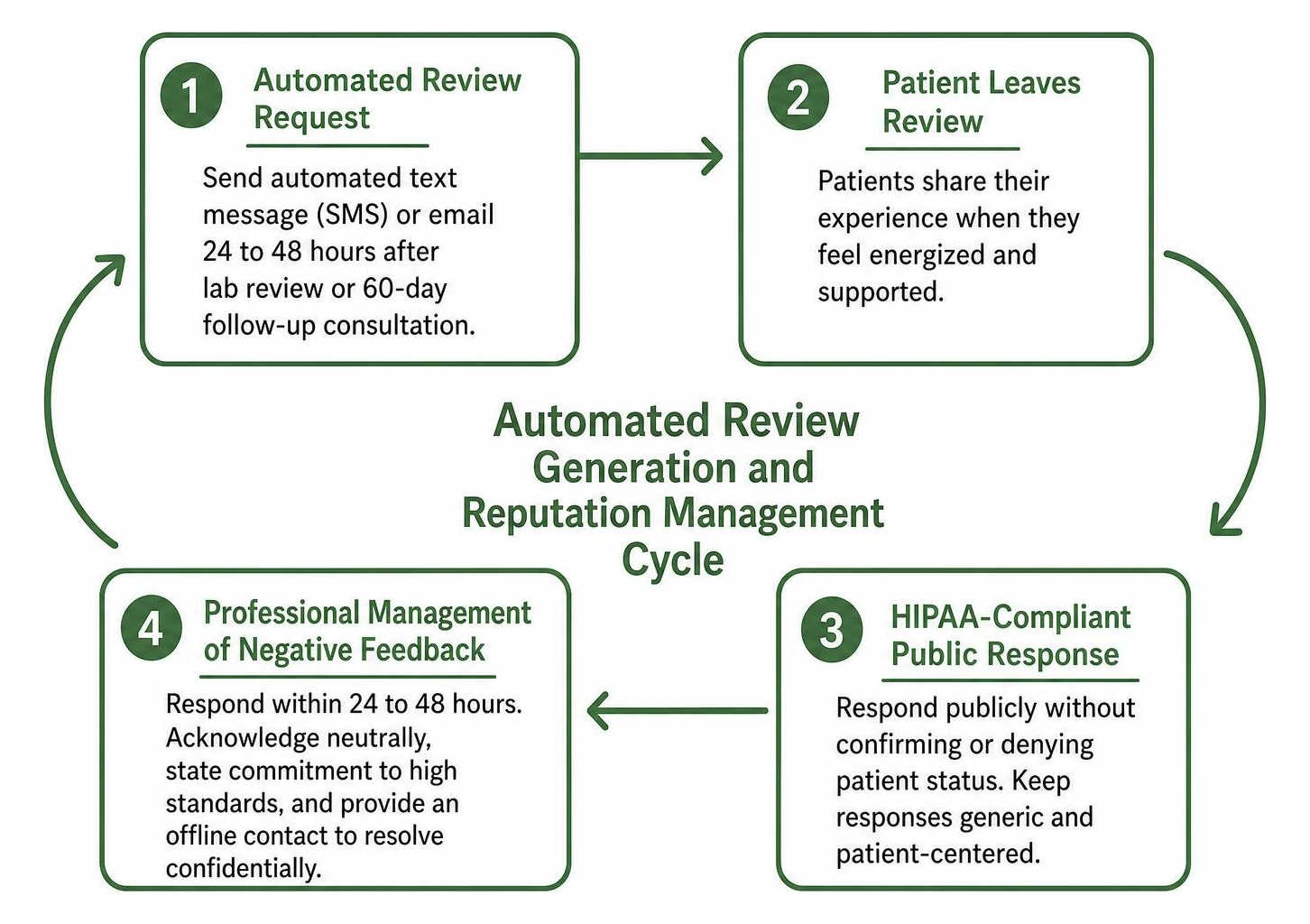
- Build a Systematic Review Request Workflow: Integrate automated text message (SMS) or email review requests into your patient management software. Send the request 24 to 48 hours after a patient receives their initial lab review or 60-day follow-up consultation, when they are feeling energized and supported.
- Strict HIPAA Compliance in Review Responses: Never confirm or deny that a reviewer is a patient of your practice in a public response. Even if a reviewer writes, “Dr. Smith cured my low testosterone!”, your public response must remain completely generic and HIPAA-compliant:
“Thank you for your feedback! Our team at Apex Vitality is dedicated to providing compassionate, patient-centered care and personalized education for our community.”
- Professional Management of Negative Feedback: If you receive a negative review, respond promptly within 24 to 48 hours. Acknowledge their frustration neutrally, state your commitment to high clinical standards, and provide a direct offline phone number or email to resolve the matter confidentially.
Frequently Asked Questions About HRT Clinic SEO
How long does it take for an HRT clinic to see organic SEO results?
Search engine optimization is a compounding long-term investment. Most hormone therapy practices begin seeing measurable movement in keyword rankings, map impressions, and website traffic within 3 to 6 months. Highly competitive metropolitan markets may take 6 to 9 months to achieve top 3 Map Pack dominance.
While paid advertising channels can generate immediate leads within days, SEO delivers sustainable, low-cost patient acquisition that continues to produce organic inquiries month after month without paying per click. Most high-performing clinics invest 10% to 20% of their gross revenue into marketing, typically allocating $3,000 to $10,000 monthly across search optimization, paid media, and patient nurture systems.
Can HRT clinics use AI to generate search content?
Artificial intelligence tools are excellent for brainstorming content outlines, organizing research notes, and structuring complex medical topics. However, clinics should never publish unedited, bulk AI-generated medical content.
Because hormone therapy is a YMYL health topic, search engines actively penalize generic, low-effort health pages that lack genuine clinical oversight. Every piece of content published on your clinic’s website must be written or rigorously reviewed, edited, and approved by a qualified medical professional (MD, DO, NP, or PA) to ensure clinical accuracy and maintain strict EEAT compliance.
What key performance metrics should hormone clinics track for SEO?
Rather than fixating solely on vanity metrics like overall website hits, hormone clinics should track data points tied directly to practice revenue:
- Organic Consultation Bookings: The number of new patient evaluations and initial blood panel appointments scheduled directly from organic search traffic.
- Google Business Profile Phone Calls & Direction Requests: High-intent actions taken by local patients searching directly inside Google Maps.
- Top 3 Local Map Pack Visibility: Tracking rank improvements across targeted zip codes for core phrases like “HRT clinic [City]” and “TRT doctor near me”.
- Patient Acquisition Cost (CAC) by Channel: Calculating the total marketing spend required to acquire a retained, recurring cash-pay hormone patient via organic search versus paid ad funnels.
Conclusion
Scaling a modern hormone replacement therapy practice in today’s competitive healthcare market requires a balanced approach. By building a high-speed, mobile-optimized website, creating in-depth service pages for every treatment modality, demonstrating undeniable clinical authority (EEAT), and dominating the local Google Map Pack, your practice can establish a dependable, compounding pipeline of high-intent patients.
At PatientEngines, we provide an end-to-end growth platform built specifically for cash-pay medical and wellness practices, including HRT, TRT, medical weight loss, and aesthetic clinics. Our dedicated team manages the entire patient journey, from custom branding and technical SEO to automated lead nurture and HIPAA-compliant follow-up.
If you are ready to scale your practice and dominate your local search market, partner with PatientEngines to build your customized growth strategy.