How to Get an Online Weight Loss Prescription

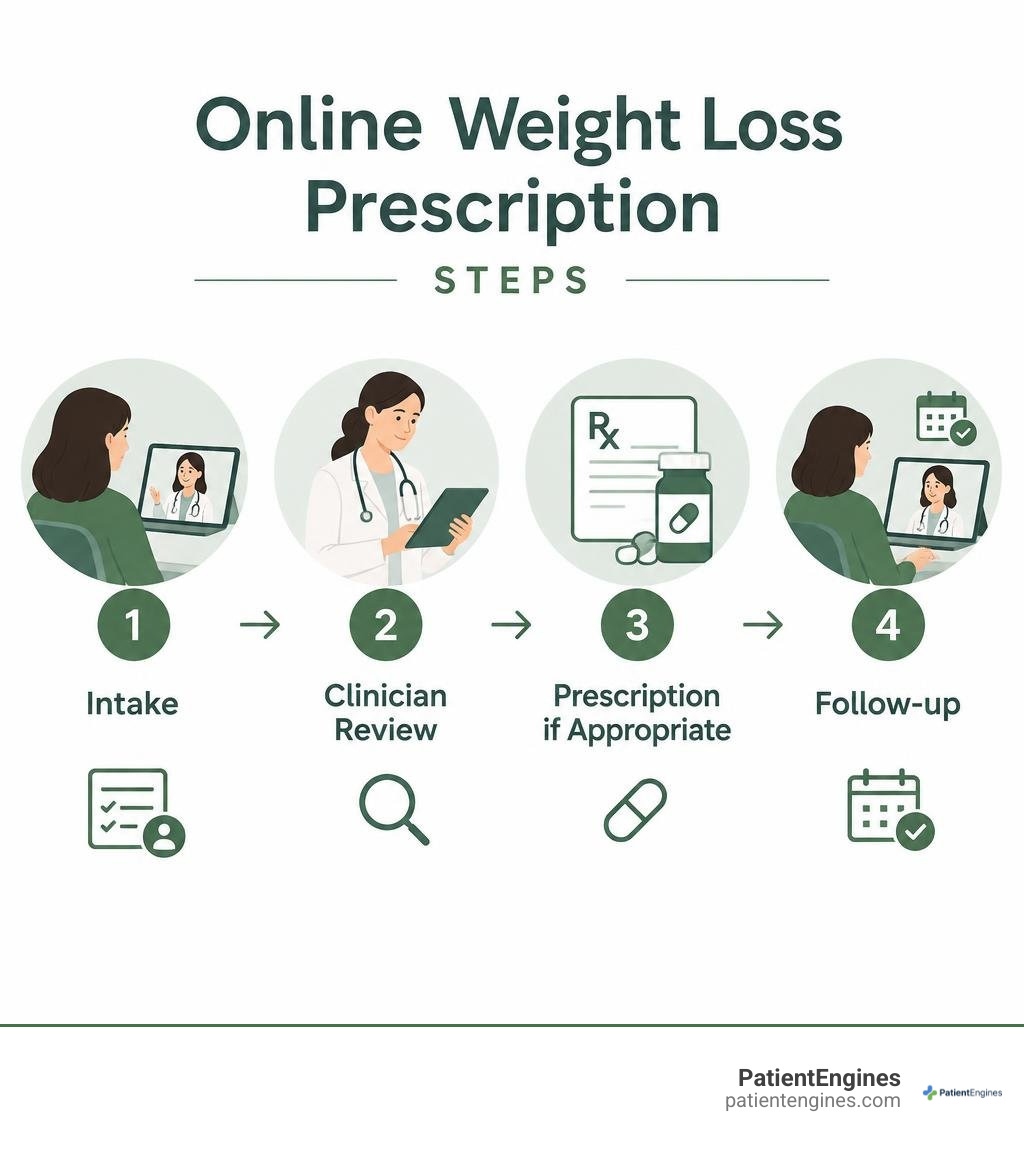
To get an online weight loss prescription, start with a licensed telehealth provider. Share your weight, health history, current medicines, and any recent lab results. A clinician will check whether treatment is safe for you, then prescribe medication if appropriate and plan follow-up visits. For many weight loss medications, adults generally need a body mass index (BMI) of at least 30, or at least 27 with a weight-related health condition. An online visit does not guarantee a prescription.
Costs depend on the care fee, the medication, and whether insurance covers it. Before you sign up, ask what follow-up care includes and what you could pay for the prescription.
I’m Matt Coffy, CEO of PatientEngines. I’ve spent more than 15 years helping healthcare practices improve patient acquisition and follow-up, including for services where people seek an online weight loss prescription.
How to Qualify for an Online Weight Loss Prescription
Getting evaluated for modern metabolic therapies no longer requires sitting in a crowded waiting room. However, medical guidelines remain stringent to ensure safety and long-term success. Telehealth platforms follow strict clinical protocols when evaluating prospective patients.
Medical Eligibility Criteria for an Online Weight Loss Prescription
To qualify for anti-obesity medications, providers look at several baseline health indicators:
- Body Mass Index (BMI): An adult typically qualifies with a BMI of 30 kg/m² or higher (classified as obesity), or a BMI of 27 kg/m² or higher with at least one weight-related comorbidity.
- Comorbid Conditions: Qualifying health issues include high blood pressure (hypertension), dyslipidemia (high cholesterol), obstructive sleep apnea, cardiovascular risk factors, or prediabetes.
- Age Requirements: Most adult virtual programs serve individuals ages 18 to 64, though specific protocols vary based on medical history.
- Exclusions & Contraindications: Providers screen carefully for personal or family histories of medullary thyroid carcinoma (MTC) or Multiple Endocrine Neoplasia syndrome type 2 (MEN 2). Active pancreatitis, severe gastrointestinal disease, pregnancy, or nursing will also disqualify a patient from initiating these therapies.
Required Lab Work and Pre-Treatment Screenings
Before prescribing metabolic treatments, clinicians require recent diagnostic blood tests to establish a baseline:
- Comprehensive Metabolic Panel (CMP): Measures liver function, electrolytes, and kidney health (specifically serum creatinine and estimated glomerular filtration rate, or eGFR).
- Glycemic Indicators: Fasting plasma glucose and HbA1c to screen for undiagnosed type 2 diabetes or monitor prediabetes.
- Lipid Panel: Evaluates baseline cholesterol and triglyceride levels.
- Thyroid Stimulating Hormone (TSH): Rules out underlying thyroid disorders contributing to unexplained weight shifts.
If you have completed blood work within the past 3 to 6 months through your primary care provider, you can often upload these records directly during your virtual intake.
How Virtual Care Works: Step-by-Step Guide to Getting Started
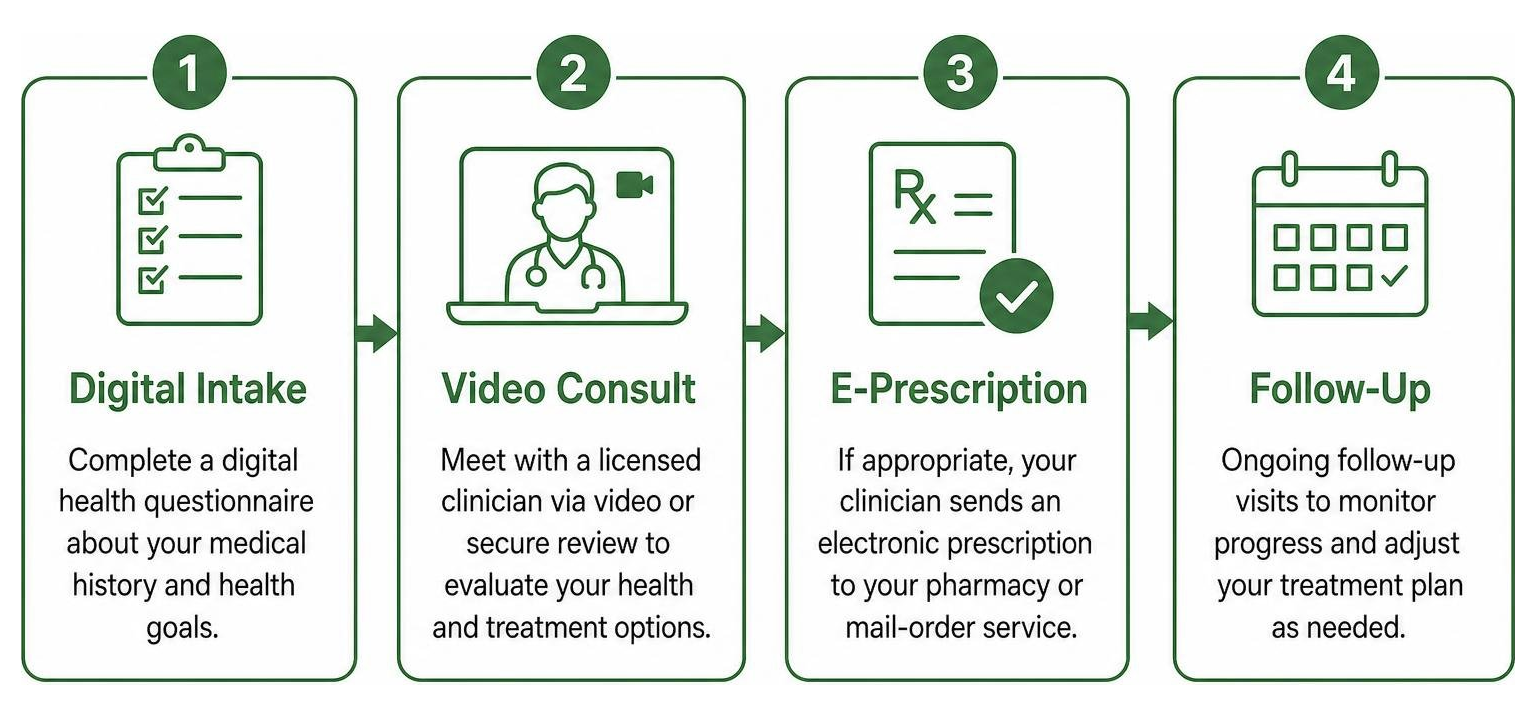
Modern telehealth streamlines the path from your initial health assessment to pharmacy fulfillment.
Navigating Your Consultation for an Online Weight Loss Prescription
- Digital Health Questionnaire: You complete a comprehensive medical intake outlining your weight history, prior dieting attempts, current medications, and family health background.
- Virtual Clinical Evaluation: You meet with a licensed clinician via video call or secure clinical review. The provider examines your diagnostic history, evaluates your metabolic profile, and reviews established evidence-based weight management protocols.
- Prescription & Fulfillment: If medically appropriate, your clinician sends an electronic prescription (e-script) directly to your local pharmacy or an affiliated home-delivery mail-order service.
- Ongoing Titration & Support: Effective medical weight management requires regular follow-ups every 4 to 12 weeks to adjust dosages, monitor potential side effects, and optimize nutrition.
GLP-1 Medications Explained: Injectables vs. Oral Weight Loss Pills
Glucagon-like peptide-1 (GLP-1) receptor agonists mimic natural incretin hormones released in the gut after eating. They stimulate insulin secretion, slow gastric emptying, signal satiety to the brain, and significantly reduce “food noise”, the persistent mental preoccupation with snacking.
| Feature | Weekly Injectable GLP-1s (Semaglutide / Tirzepatide) | Daily Oral GLP-1 Pills (Oral Semaglutide / Orforglipron) |
|---|---|---|
| Administration | Subcutaneous injection once weekly | Oral tablet taken once daily |
| Primary Mechanism | GLP-1 RA or dual GIP/GLP-1 RA | GLP-1 receptor agonist |
| Average Weight Loss | 14% to 20.9% of body weight | 11% to 14% of body weight |
| Dietary Timing | Any time of day, with or without food | Strict morning fasting (semaglutide) or flexible (orforglipron) |
| Storage | Refrigeration required before first use | Room-temperature stable pill bottles |
Injectable GLP-1 Formulations and Clinical Efficacy
Weekly injectables remain the gold standard for clinical weight reduction:
- Semaglutide (Wegovy): In clinical trials, adults using semaglutide alongside diet and exercise lost an average of 14% to 15% of their starting body weight (about 35 pounds).
- Tirzepatide (Zepbound): As a dual GIP and GLP-1 receptor agonist, tirzepatide targets two distinct metabolic pathways. In 72-week trials, patients taking the highest dose (15 mg) lost an average of 20.9% of their body weight (compared to 3.1% in the placebo group). Tirzepatide has also shown a 94% reduction in progression from prediabetes to type 2 diabetes.
Daily Oral GLP-1 Pills and Non-Injectable Options
For individuals who prefer to avoid weekly needles, daily oral alternatives provide strong metabolic support:
- Oral Semaglutide (Wegovy Pill): Delivers systemic metabolic results comparable to injections, with trial participants losing an average of 14% of starting body weight (~33 pounds).
- Orforglipron (Foundayo): A non-peptide oral GLP-1 receptor agonist that does not carry strict food or water timing rules. In a 72-week trial, patients on the highest dose lost an average of 27.3 pounds (12.4% of body weight), while a separate study in non-diabetic adults showed an average 11% loss.
Navigating Treatment Costs: Insurance, Cash-Pay, and Savings Programs
Understanding the total financial investment requires separating virtual clinical visit fees from the actual cost of medication.

Practices operating in this space often adapt their patient communications and operational workflows; discovering effective medical weight loss marketing can clarify how modern clinics present transparent pricing. When assessing international care standards, organizations like those demonstrating telehealth weight regulation standards show how digital delivery models are utilized worldwide.
Insurance Coverage and the Medicare GLP-1 Bridge Program
- Commercial Plans & Prior Authorization: Many commercial insurers require detailed prior authorizations showing documented lifestyle interventions and baseline BMI thresholds before approving coverage for weight management medications. With insurance approval, copays often drop to $25 to $45 per month.
- Medicare GLP-1 Bridge Program: While standard Medicare Part D plans historically excluded medications prescribed purely for obesity, the Medicare GLP-1 Bridge program allows eligible Medicare beneficiaries to access select treatments (such as Wegovy, Zepbound, or Foundayo) for an estimated $50 per month copay once specific medical necessity criteria are met.
Manufacturer Savings Cards and Cash-Pay Pricing Models
- Manufacturer Coupons: Drug makers offer digital savings cards that reduce out-of-pocket costs to $25 to $149 per month for eligible commercially insured patients whose plans do not fully cover the drug.
- Government Program Restrictions: Federal regulations prohibit using manufacturer copay cards with government-funded health programs, including Medicare, Medicaid, and TRICARE.
- Self-Pay Cash Pricing: Patients paying entirely out of pocket without insurance coverage generally see brand-name monthly medication costs ranging from $149 to $349, while standard telehealth consult fees typically range from $29 to $49 per visit (or $39 per month on membership tiers).
Long-Term Maintenance: Managing Side Effects and Preventing Rebound Weight
Starting an anti-obesity medication is not a quick cosmetic fix; it is a long-term treatment plan.
When medications are stopped abruptly, biological mechanisms work to return the body to its previous set-point. Appetite and “food noise” return, which can cause weight regain if supportive habits are not firmly established.
Integrating structured behavioral programs, strength training to preserve lean muscle, and regular check-ins helps ensure results last. To see how seamless patient support structures operate across modern practices, understanding how it works reveals how automated follow-ups keep individuals engaged throughout their health journey.
Frequently Asked Questions About Online Weight Loss Prescriptions
How fast do GLP-1 weight loss medications begin working?
Appetite suppression and reduced food cravings often begin within the first few days to weeks of starting treatment. Clinically meaningful weight loss, defined as losing 5% or more of starting body weight, is typically achieved by week 12, with the most rapid reductions occurring between months 3 and 6 as the medication is safely titrated upward.
What happens if I stop taking a prescription weight loss medication?
Because obesity is a chronic metabolic condition, stopping medication typically leads to an increase in appetite and a gradual return of weight. To protect your progress, work with your clinician on a structured tapering protocol or long-term maintenance dose while continuing consistent dietary, resistance training, and behavioral habits.
Are online weight loss prescriptions legally recognized and safe?
Yes. In the United States, licensed physicians, nurse practitioners, and physician assistants can legally prescribe FDA-approved medications via telehealth. Prescriptions are submitted directly to licensed pharmacies through secure, HIPAA-compliant electronic prescribing networks after an appropriate clinical assessment.
Conclusion
Obtaining an online weight loss prescription gives you access to modern, evidence-based metabolic therapies without the friction of traditional clinic appointments. By pairing advanced medications with ongoing medical oversight and lifestyle changes, you can achieve safe, lasting weight reduction.
For medical clinics and wellness providers seeking to deliver these specialized services, PatientEngines provides an end-to-end growth platform for medical practices. Our embedded team supports the entire patient journey, from patient acquisition to automated, HIPAA-compliant follow-ups, helping modern practices deliver exceptional care.