
Regenerative Medicine Trends Changing Clinical Care in 2026
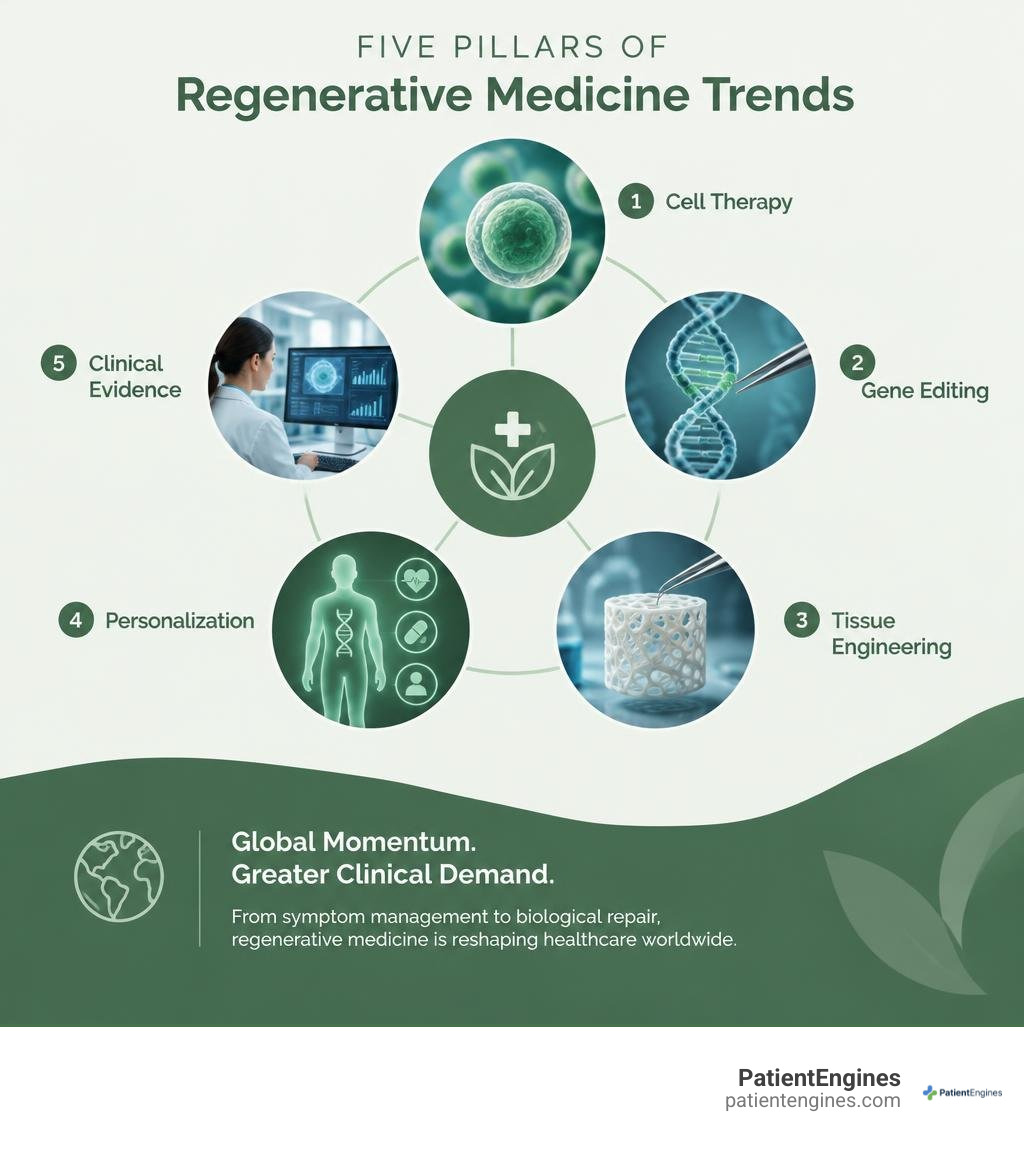
The regenerative medicine trends to watch in 2026 are cell therapies, gene editing, tissue engineering, and treatments tailored to each patient. Researchers are also testing 3D bioprinting and cell-free approaches, such as exosomes. The key distinction: some therapies are already part of clinical care, while many newer uses still need stronger evidence and regulatory approval.
For practice owners, interest in these treatments creates an opportunity to educate patients clearly. It also makes it important to separate proven care from promising research and unsupported claims.
I’m Matt Coffy, CEO of PatientEngines. After more than 15 years helping healthcare practices grow, I follow regenerative medicine trends with a focus on how practices can communicate new options clearly and responsibly.
Global Market Trajectory and Clinical Demand
The shift from temporary symptom management to biological repair is creating massive momentum across global healthcare. As clinical trials mature into commercial therapies, the demand for regenerative solutions is reshaping investment priorities and practice models worldwide.

To understand this expansion, we can look at the translational market growth connecting laboratory breakthroughs with everyday patient treatment.
Breakthrough Regenerative Medicine Trends in Market Growth
The global regenerative medicine market reached a valuation of USD 48.17 billion in 2025 and is projected to expand to USD 360.84 billion by 2034, registering a compound annual growth rate (CAGR) of 25.56%. In 2026 alone, the U.S. market is estimated at approximately USD 23.60 billion, accounting for roughly 40.4% of global demand.
North America continues to lead the sector, capturing 43.01% of the global market in 2025 with a regional valuation of USD 20.72 billion. This dominance is sustained by extensive clinical trial infrastructure, substantial venture financing, and established regulatory pathways. Meanwhile, the Asia-Pacific region is experiencing the fastest regional acceleration, spurred by aging populations and proactive governmental backing in nations such as Japan and South Korea.
Hospitals represented the largest end-user segment in 2025, serving as the primary centers for delivering advanced cellular infusions and complex surgical implants. Strategic mergers and acquisitions are further accelerating this pipeline. Large pharmaceutical companies are actively acquiring specialized biotech firms to secure proprietary cell-processing technologies and scale production.
| Region | 2025 Market Share (%) | Key Growth Drivers |
|---|---|---|
| North America | 43.01% | High venture investment, established RMAT pathways, clinical adoption |
| Europe | ~26.50% | Strong academic clinical networks, harmonized ATMP framework |
| Asia-Pacific | ~22.10% | Aging demographics, accelerated regenerative approval systems |
| Rest of World | ~8.39% | Expanding medical infrastructure and clinical trial participation |
Leading Clinical Applications: Orthopedics and Wound Care
Among clinical specialties, orthopedics held the largest market share by application in 2025. Musculoskeletal repair, targeting osteoarthritis, focal cartilage defects, tendon tears, and degenerative spinal conditions, represents the most established commercial entry point for cellular and biologic interventions.
Wound care is the fastest-advancing clinical segment, projected to grow at a 24.83% CAGR between 2026 and 2034. Chronic, non-healing wounds such as diabetic foot ulcers and venous stasis ulcers present severe clinical burdens that conventional dressings struggle to resolve. Clinicians are achieving improved tissue closure by deploying advanced bioactive matrices, allogeneic placental tissue grafts, and autologous keratinocyte suspensions.
Core Regenerative Medicine Trends Shaping Modern Healthcare
Recent progress spans diverse biological disciplines, moving from laboratory research directly into standardized clinical protocols (Hussen et al., 2024).

Cell Therapy and Stem Cell Innovations
The cell therapy segment captured the largest global product share in 2025. Cellular therapies fall into several main platforms:
- Mesenchymal Stem Cells (MSCs): Sourced from bone marrow, adipose tissue, and perinatal sources (such as umbilical cord tissue and Wharton’s jelly), MSCs are widely utilized for their immunomodulatory and trophic properties.
- Hematopoietic Stem Cells (HSCs): HSC transplantation remains an established therapeutic benchmark. Data from the European Society for Blood and Marrow Transplantation (EBMT) Registry shows that over 927,080 transplants have been performed across the European region.
- CAR T-Cell Therapies: Beyond oncology, where more than 17,794 European patients have received CAR T-cell therapy, cellular immunotherapies are expanding into refractory autoimmune diseases like systemic lupus erythematosus.
- Induced Pluripotent Stem Cells (iPSCs): By reprogramming adult somatic cells back into a pluripotent state, researchers are developing patient-matched cell lines to study and treat neurodegenerative conditions, macular degeneration, and cardiovascular damage.
Clinicians can review emerging clinical trial developments for 2026 to track active Phase II and Phase III protocols.
Emerging Regenerative Medicine Trends in Bioprinting and Gene Editing
Tissue engineering is projected to expand at a CAGR of 21.07% from 2026 to 2034. Advances in 3D bioprinting now allow researchers to deposit live cells, decellularized extracellular matrix, and biocompatible polymers into organized, functional structures.
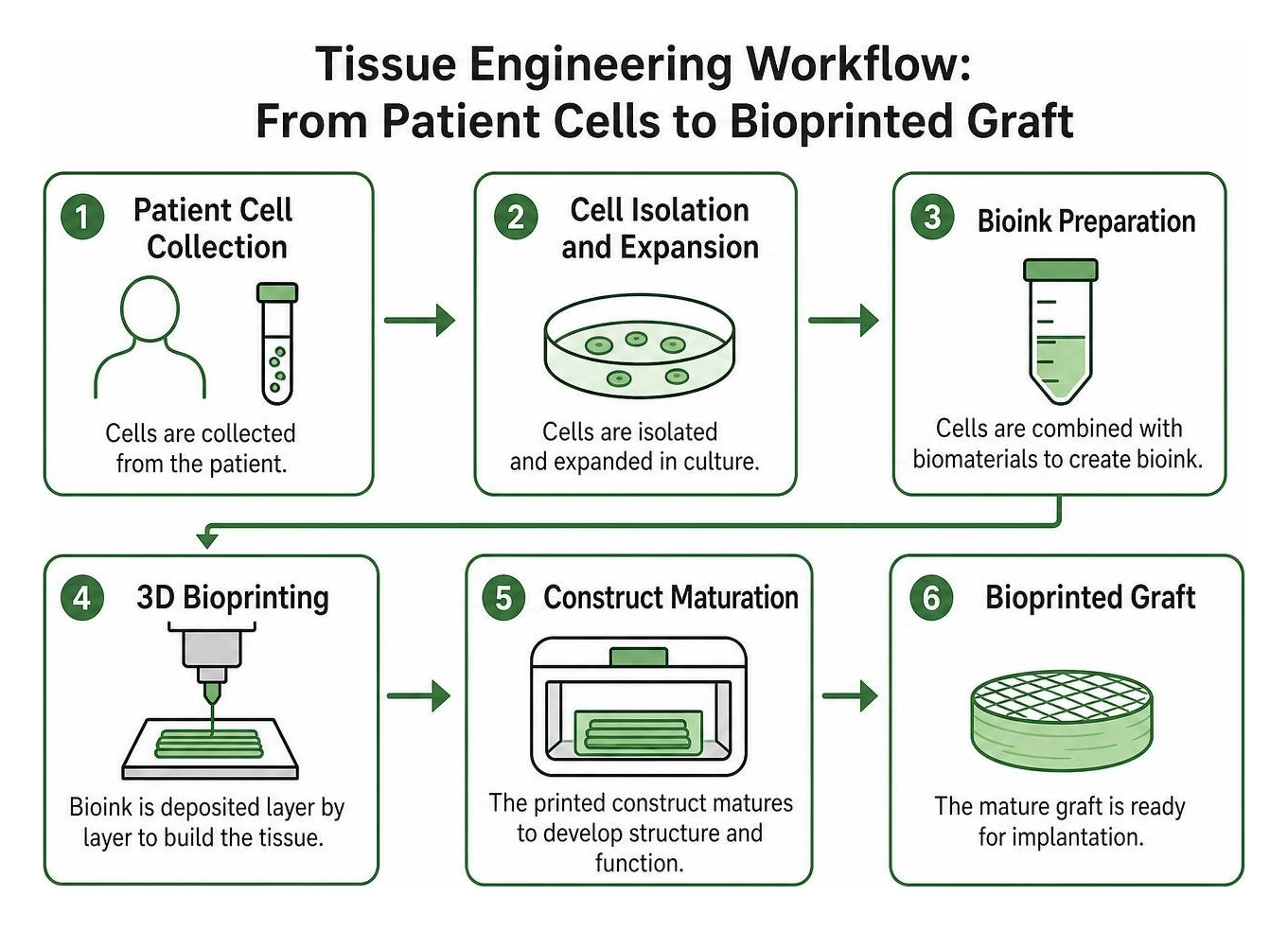
A central objective remains tissue vascularization, fabricating microcapillary networks within engineered constructs so transplanted cells survive after implantation. Simultaneously, microfluidic organ-on-a-chip platforms are improving how drug candidates are tested prior to human clinical trials.
In tandem with biofabrication, CRISPR-Cas9 genome editing is driving long-term corrections in monogenic conditions. By correcting defective genetic sequences in ex vivo hematopoietic stem cells, gene-edited cell products are offering curative outcomes for disorders like sickle cell disease and transfusion-dependent beta-thalassemia.
Exosome Therapeutics and Cell-Free Modalities
Extracellular vesicles, specifically exosomes, represent an important cell-free modality. Ranging from 30 to 150 nanometers in diameter, these nano-vesicles are secreted by stem cells and carry microRNAs, messenger RNAs, signaling proteins, and lipids directly to target tissues.
Exosome therapies offer practical clinical advantages:
- Lower Immunogenicity: Because they lack human leukocyte antigen (HLA) cell-surface complexes, exosomes carry minimal risk of immune rejection.
- Paracrine Signaling: They deliver restorative signals to suppress pro-inflammatory cytokines, stimulate angiogenesis, and limit apoptosis without requiring live cell engraftment.
- Manufacturing Stability: Exosomes can be purified, standardized, and stored with longer shelf-lives than intact living cells, making them an attractive off-the-shelf therapeutic candidate.
Technological Convergence and Precision Protocols
The integration of artificial intelligence and digital analytics is transforming regenerative protocols from generalized procedures into targeted treatments. Modern clinicians are pairing these therapies with emerging cellular and longevity protocols to improve long-term outcomes.
AI-Driven Multi-Omics and Protocol Optimization
Predictive algorithms and multi-omics profiling are optimizing both therapeutic manufacturing and patient selection:
- Differentiation Modeling: AI algorithms evaluate stem cell morphological changes and gene expression markers in real time, predicting lineage differentiation pathways with high accuracy.
- Automated Quality Control: Computer vision monitors bioreactor cultures, identifying cellular senescence or contamination before batch completion.
- Precision Dosing: Machine learning models evaluate individual genetic profiles, baseline inflammatory markers, and metabolic factors to assist clinicians in tailoring cell counts, carrier matrices, and rehabilitation schedules.
Targeted Interventions and Systems Biology
Leading medical practices increasingly combine biological products with targeted delivery methods. Ultrasound-guided injections ensure that regenerative biologics reach precise anatomical structures, such as damaged intra-articular spaces or tendon sheaths.
Furthermore, clinics are adopting systems-biology frameworks that integrate complementary modalities:
- Targeted Peptide Protocols: Utilizing specific signaling peptides (such as BPC-157 or Thymosin Beta-4) to support local angiogenesis and collagen synthesis.
- Mitochondrial Support: Applying metabolic cofactors to enhance cellular energy reserves prior to regenerative procedures.
- Autonomic Optimization: Using interventions like stellate ganglion blocks to balance sympathetic hyperactivity, reducing chronic inflammation that could hinder tissue healing.
Practices seeking to educate patients on these multidisciplinary care options can utilize dedicated services designed to communicate treatment pathways clearly and ethically.
Overcoming Clinical, Economic, and Regulatory Hurdles
Despite strong scientific progress, expanding patient access requires resolving manufacturing, regulatory, and cost bottlenecks.
Regulatory Acceleration and Global Harmonization
Global regulatory bodies are refining accelerated approval pathways for advanced therapies:
- United States: The FDA uses the Regenerative Medicine Advanced Therapy (RMAT) designation under the 21st Century Cures Act to expedite review timelines for therapies treating serious or life-threatening conditions. In February 2026, the FDA approved AUCATZYL (obecabtagene autoleucel) for adults with relapsed or refractory B-cell precursor acute lymphoblastic leukemia.
- Europe: The European Medicines Agency (EMA) oversees the Advanced Therapy Medicinal Products (ATMP) pathway. In March 2026, the European Commission approved Hemgenix as a one-time gene therapy for adults with severe or moderately severe haemophilia B.
- Japan: The Pharmaceuticals and Medical Devices Agency (PMDA) continues to utilize its Sakigake designation, granting conditional commercial approval to promising regenerative treatments that demonstrate early safety and clinical signals.
These accelerated pathways are reflected in recent accelerated regulatory approvals data, which highlights steady growth in late-stage Phase III clinical candidates.
Treatment Costs, Scalability, and Commercial Delivery
High therapy costs remain a primary barrier to widespread clinical adoption. Autologous stem cell treatments and point-of-care biologic procedures typically range from USD 5,000 to USD 50,000 per intervention, depending on cell source, preparation volume, and imaging requirements. Advanced gene-edited therapies can exceed several hundred thousand dollars per patient.
These price points stem from complex manufacturing requirements, including stringent Good Manufacturing Practice (GMP) standards, specialized cleanrooms, single-use bioreactors, and cold-chain cryopreservation logistics.
To improve access, the industry is transitioning from custom autologous preparations toward scalable, allogeneic “off-the-shelf” products derived from healthy donor tissues. At the same time, automated and closed-system bioreactors are helping reduce labor requirements and lower batch-to-batch production costs.
Frequently Asked Questions About Regenerative Medicine
What is the current market size and growth forecast for regenerative medicine?
The global regenerative medicine market was valued at USD 48.17 billion in 2025 and is projected to reach USD 360.84 billion by 2034, representing a compound annual growth rate (CAGR) of 25.56%. North America currently leads the global market with a 43.01% share in 2025, while the U.S. market alone is projected to reach approximately USD 23.60 billion in 2026.
Which clinical applications are driving the highest demand?
Orthopedics accounts for the largest application share, driven by high demand for joint preservation, cartilage repair, and soft tissue healing. Wound care is the fastest-growing clinical area, with a projected CAGR of 24.83% through 2034 as clinicians adopt advanced cellular skin substitutes and bioactive matrices for non-healing chronic ulcers.
How are FDA and EMA regulatory pathways accelerating therapy approvals?
Regulatory agencies use specialized pathways to expedite access to transformative treatments. The FDA’s RMAT designation provides priority review and early regulatory engagement for qualifying cell and gene therapies, while the EMA’s ATMP framework coordinates clinical standards across European member states. These programs help streamline clinical development while maintaining safety and efficacy standards.
Conclusion
Regenerative medicine is transitioning from experimental biology into an integral pillar of modern clinical practice. By combining cellular biology, tissue engineering, and artificial intelligence, these therapies offer practical solutions for chronic conditions that conventional approaches manage only symptomatically.
For forward-thinking healthcare providers, keeping pace with scientific research, regulatory milestones, and ethical communication standards is essential for delivering high-quality patient care. Practices looking to build patient trust and communicate their clinical offerings effectively can benefit from specialized regenerative medicine marketing strategies designed to deliver clear, compliant, and transparent education.
References
Hussen BM, Taheri M, Yashooa RK, Abdullah GH, Abdullah SR, Kheder RK, Mustafa SA. “Revolutionizing medicine: recent developments and future prospects in stem-cell therapy..” International journal of surgery (London, England), 2024. PMCID PMC11634165.